

Chicago Permanent Disability Workers’ Compensation Lawyer
A Chicago permanent disability workers’ compensation lawyer can help you pursue the benefits you need when your condition will not fully heal.
Illinois workers’ compensation law may provide long-term financial support, including compensation for lost earning ability, ongoing medical care, and the lasting impact on your daily life.
In Chicago, permanent disability claims often involve disputes over how severe your condition is and how much compensation you should receive. Insurance companies may attempt to limit payouts or argue that your injury is not as serious as you claim. DePaolo Zadeikis & Pino provides guidance to help you protect your rights and pursue the full benefits available under the law.
“Permanent disability cases are about more than numbers. They are about your future, your ability to work, and your quality of life. You should never accept less than what the law allows.”
~ Attorney Donna Zadeikis

If you are dealing with a lasting work injury, contact our team at (312) 263-7560 for a consultation.
What Is Permanent Disability in Illinois Workers’ Compensation?
A permanent disability means your work-related injury or illness has reached maximum medical improvement, but you still have lasting limitations. Your condition may never fully heal, even with ongoing treatment.
In Illinois, permanent disability falls into several categories:
- Permanent Partial Disability (PPD)
- Permanent Total Disability (PTD)
- Disfigurement
Each category affects how your benefits are calculated and how long they last.
Maximum Medical Improvement (MMI)
You reach MMI when your doctor determines that your condition has stabilized. This does not mean you are fully healed. It means further treatment is unlikely to improve your condition significantly.
Once you reach MMI, your case may move toward a permanent disability evaluation.

Alexander Pino focuses his practice in the areas of Workers’ Compensation and Personal Injury.
Alexander grew up in the suburbs of Chicago. After receiving a BS in Real Estate from DePaul University, Alexander attended DePaul University College of Law. While in law school, Alexander worked as a law clerk at the Illinois Attorney General’s Office, where he assisted attorneys in the Child Welfare Litigation Department. Alexander also held various internships at the Cook County Public Defender, where he aided Assistant Public Defenders in the Felony Trial Division and the Homicide Task Force. Alexander also worked as a Law Clerk at the personal injury law firm Horwitz, Horwitz & Associates. Additionally, during law school, Alexander held volunteer positions in local government as a board member in both the Parks and Recreation Commission and the Environmental and Health Commission of his hometown.
In those rare moments when he is not busy fighting for his clients, Alexander enjoys working out, hiking, fishing and spending time with his family.
Types of Permanent Disability Benefits
Understanding the type of workers’ compensation benefits you may receive is critical. Illinois law provides different compensation structures depending on your injury.
Permanent Partial Disability (PPD)
PPD applies when you can still work but with limitations. Benefits may be based on:
- Loss of use of a body part
- Reduced earning capacity
- Nature of the injury
For example, injuries to hands, arms, legs, or vision often follow a scheduled loss system.
Permanent Total Disability (PTD)
PTD applies when you cannot return to any type of gainful employment. If you qualify, you may receive:
- Weekly wage replacement benefits
- Payments for life
- Continued medical care
This category often applies to severe injuries such as paralysis or multiple limb loss.
Disfigurement Benefits
If your injury results in visible and permanent scarring to areas like your face, head, neck, or hands, you may qualify for disfigurement compensation.
In Illinois, permanent partial disability benefits are often calculated using a schedule that assigns a specific number of weeks of compensation to different body parts. Even a partial loss of use, such as reduced mobility in a hand or shoulder, can qualify you for financial recovery under workers’ compensation law.
How Permanent Disability Is Calculated
Your total compensation amount depends on several factors. These include:
- Your average weekly wage before the injury
- The severity of your disability
- The affected body part
- Your ability to return to work
Illinois uses a formula to determine benefits, but disputes often arise over how severe your disability is. There are several factors that may influence your claim, including:
- Medical evidence and doctor evaluations
- Functional limitations
- Work restrictions
- Vocational impact
Insurance companies may rely on their own doctors to minimize your rating. This can reduce the benefits you receive.
Common Workplace Injuries That Lead to Permanent Disability
Many types of injuries can result in long-term or permanent impairment. Some of the most common include:
- Spinal cord injuries
- Traumatic brain injuries
- Severe back and neck injuries
- Amputations
- Repetitive stress injuries
- Burns and disfigurement
Even injuries that seem minor at first can develop into lasting conditions if not treated properly.
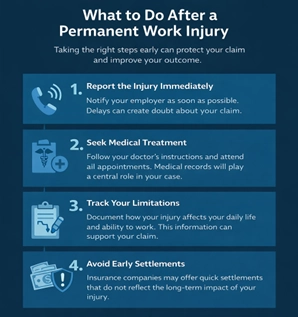
What to Do After a Permanent Work Injury
Taking the right steps early can protect your claim and improve your outcome.
1. Report the Injury Immediately
Notify your employer as soon as possible. Delays can create doubt about your claim.
2. Seek Medical Treatment
Follow your doctor’s instructions and attend all appointments. Medical records will play a central role in your case.
3. Track Your Limitations
Document how your injury affects your daily life and ability to work. This information can support your claim.
4. Avoid Early Settlements
Insurance companies may offer quick settlements that do not reflect the long-term impact of your injury.
Challenges in Permanent Disability Claims
Permanent disability claims often face resistance from insurance companies. You may encounter:
- Disputes over whether your injury is work-related
- Disagreements about your disability rating
- Delays in benefit payments
- Pressure to return to work too soon
These challenges can affect your financial stability and recovery.
Why Legal Guidance Matters in Permanent Disability Cases
Permanent disability claims carry long-term financial and personal consequences, which makes getting the details right essential. Even small mistakes in paperwork, medical documentation, or deadlines can reduce your benefits or delay the support you need. Insurance companies often review these claims closely and may try to minimize payouts by questioning the severity of your condition or your ability to work.
Working with an attorney helps level the playing field. A lawyer can explain your rights under Illinois law in clear terms, gather detailed medical evidence to support your claim, and challenge any unfair disability ratings. They also handle negotiations to pursue a settlement that reflects the true impact of your injury. If your case moves to a hearing, your attorney can present your case effectively and respond to disputes.
Without legal guidance, it is easy to accept less than your case is worth. An attorney helps protect your interests at every step.
Settlements vs. Ongoing Benefits
You may have the option to settle your claim for a lump sum or receive ongoing payments.
Lump-Sum Settlements
A lump-sum settlement provides a one-time payment. This can offer immediate financial relief but may limit future claims.
Ongoing Benefits
Ongoing payments provide steady income over time. This may be more suitable for severe or lifelong disabilities.
Choosing between these options depends on your medical condition, financial needs, and long-term goals.
In Illinois, strict deadlines apply to workers’ compensation claims.
You generally must:
- Report your injury within 45 days
- File a claim within three years of the injury date or two years from the last payment of benefits
Missing these deadlines can prevent you from recovering compensation.
Returning to Work With a Permanent Disability
Returning to work after a permanent injury depends on your physical limitations and your employer’s ability to accommodate those restrictions. Some workers can transition into modified or light-duty roles, while others may need to explore new types of employment.
If your previous position is no longer an option, Illinois workers’ compensation may provide support to help you move forward in a different role.
Vocational Rehabilitation
Vocational rehabilitation is designed to help you re-enter the workforce in a job that matches your current abilities. These services focus on improving your employability while respecting your medical restrictions.
This may include:
- Job retraining for a new field
- Education programs to build new skills
- Job placement assistance to find suitable work
- Resume development and interview preparation
In some cases, you may also receive maintenance benefits while participating in a rehabilitation program. These payments can help replace lost income during your transition.
The goal is to help you return to steady employment in a role that fits your limitations and supports your long-term financial stability.
Frequently Asked Questions About Permanent Disability Workers’ Compensation
How do I know if my injury qualifies as a permanent disability?
Your doctor will determine when you reach maximum medical improvement. If you still have lasting limitations at that point, your condition may qualify as permanent. The severity of your impairment and how it affects your ability to work will influence your classification and benefits.
Can I receive benefits if I can still work?
Yes, you may qualify for permanent partial disability benefits. These apply when you can work but have limitations or reduced earning capacity. Your compensation will depend on how your injury affects your job performance and future employment opportunities.
What if the insurance company disagrees with my disability rating?
Disputes over disability ratings are common. Insurance companies may use their own medical evaluations to challenge your claim. You can present additional medical evidence and request a hearing to resolve the disagreement and seek a fair outcome.
Will I receive benefits for life?
If you qualify for permanent total disability, you may receive lifetime benefits. Permanent partial disability benefits are typically paid for a set period based on your injury. The structure of your payments depends on the type and severity of your disability.
Can I settle my permanent disability claim?
Yes, many claims are resolved through settlements. However, once you accept a settlement, you may not be able to seek additional compensation later. It is important to evaluate your long-term needs before agreeing to any offer.
Take the Next Step Toward Protecting Your Future
A permanent disability can affect your income, your health, and your ability to work. You should not face these challenges without clear guidance. Understanding your rights is the first step toward securing the compensation you need.
If you are dealing with a lasting workplace injury, take action now. Call DePaolo & Zadeikis at (312) 263-7560 for a consultation and learn how we can help protect your future under Illinois workers’ compensation law.