

Chicago Workers’ Compensation Claim Denial Lawyer
If your workers’ compensation claim was denied in Chicago, you’re probably facing medical bills, lost income, and uncertainty about your next steps. Illinois workers’ compensation laws are designed to provide benefits for employees injured while performing their job duties. However, insurance carriers sometimes deny claims for a variety of reasons.
A Chicago workers’ compensation claim denial lawyer at our firm can review your denial, explain why the claim may have been rejected, and help determine what options are available under Illinois law.
At DePaolo Zadeikis & Pino, LLC, we represent injured workers throughout Chicago who are dealing with denied or disputed workers’ compensation claims. Our attorneys help clients understand the appeals process and work to present the evidence necessary to pursue benefits through the Illinois Workers’ Compensation Commission.
“A workers’ compensation denial does not always mean the claim is over. Many injured workers still have the right to challenge that decision and present evidence through the Illinois Workers’ Compensation Commission.”

If your claim has been denied, call (312) 263-7560 to schedule a consultation.
Why Workers’ Compensation Claims Are Denied in Illinois
Workers’ compensation insurance is intended to provide medical coverage and wage replacement when employees suffer injuries on the job. Despite this system, claims may be denied if insurers dispute aspects of the injury or the circumstances surrounding it.
Common reasons for workers’ compensation claim denials include:
- The insurer claims the injury did not arise out of employment
- The injury is described as pre-existing
- The accident was not reported within required timelines
- Medical evidence is considered insufficient
- Disputes about whether the employee was performing job duties
- Allegations that the injury occurred outside the workplace
Sometimes a claim is denied because documentation was incomplete when the claim was first submitted. In other cases, insurance carriers may dispute whether the injury is directly connected to job-related activities.
A Chicago workers’ compensation claim denial lawyer can review the denial notice and help determine whether the decision may be challenged.

Alexander Pino focuses his practice in the areas of Workers’ Compensation and Personal Injury.
Alexander grew up in the suburbs of Chicago. After receiving a BS in Real Estate from DePaul University, Alexander attended DePaul University College of Law. While in law school, Alexander worked as a law clerk at the Illinois Attorney General’s Office, where he assisted attorneys in the Child Welfare Litigation Department. Alexander also held various internships at the Cook County Public Defender, where he aided Assistant Public Defenders in the Felony Trial Division and the Homicide Task Force. Alexander also worked as a Law Clerk at the personal injury law firm Horwitz, Horwitz & Associates. Additionally, during law school, Alexander held volunteer positions in local government as a board member in both the Parks and Recreation Commission and the Environmental and Health Commission of his hometown.
In those rare moments when he is not busy fighting for his clients, Alexander enjoys working out, hiking, fishing and spending time with his family.
What a Chicago Workers’ Compensation Claim Denial Lawyer Does
After a denial, injured workers often need help understanding the legal process and gathering the documentation necessary to move forward.
A workers’ compensation attorney may assist by:
- Reviewing the denial letter and identifying the stated reason for denial
- Collecting medical records and workplace documentation
- Preparing petitions and filings with the Illinois Workers’ Compensation Commission
- Representing workers during arbitration hearings
- Communicating with insurance carriers regarding disputed benefits
Workers’ compensation disputes frequently depend on medical evidence, employment records, and testimony about how the injury occurred. Legal guidance may help injured workers organize the necessary information and present it effectively during the claims process.
What to Do Immediately After a Workers’ Compensation Claim Denial
If your claim has been denied, there are several steps that may help protect your rights while you evaluate the next steps.
Consider the following actions:
- Review the denial letter carefully to understand the reason provided
- Continue medical treatment and follow your doctor’s recommendations
- Gather incident reports, witness statements, and medical documentation
- Keep copies of all medical bills and treatment records
- Avoid giving recorded statements before understanding your legal rights
- Contact a Chicago workers’ compensation claim denial lawyer
Responding promptly can help ensure that deadlines and documentation requirements are addressed.
The Illinois Workers’ Compensation Appeal Process
A denied claim does not necessarily mean the case is finished. Illinois law allows injured workers to challenge denied claims through the Illinois Workers’ Compensation Commission (IWCC).
The appeal process typically includes several stages, including:
Filing an Application for Adjustment of Claim
The first formal step in challenging a denial is filing an Application for Adjustment of Claim with the Illinois Workers’ Compensation Commission. This document notifies the Commission that a dispute exists regarding your workplace injury and the benefits you believe you are entitled to receive.
The application includes important details such as the date and location of the injury, the name of the employer, and the type of benefits being requested. Once filed, the claim becomes part of the Commission’s system and can move forward through the workers’ compensation dispute process.
Status Hearings
After the claim is filed, the case may be scheduled for periodic status hearings before an arbitrator. These hearings are generally brief and are used to monitor the progress of the case.
During a status hearing, the arbitrator may ask both parties about the status of medical treatment, whether evidence has been gathered, and whether settlement discussions are taking place. These hearings help ensure the case continues moving forward while the necessary documentation and medical records are being collected.
Evidence Exchange
As the case progresses, both sides typically exchange relevant evidence. This may include medical records, physician reports, employment records, accident reports, and other documentation related to the workplace injury.
Medical evidence is often a key factor in workers’ compensation disputes. Detailed records describing how the injury occurred and how it affects your ability to work can play an important role in the outcome of the case.
Arbitration Hearing
If the dispute cannot be resolved earlier, the case may proceed to an arbitration hearing before an arbitrator with the Illinois Workers’ Compensation Commission. During this hearing, both sides have the opportunity to present evidence and testimony
Witnesses may include the injured worker, medical professionals, and other individuals with knowledge of the incident. The arbitrator reviews the information presented to determine whether workers’ compensation benefits should be awarded.
Written Decision
After the hearing concludes, the arbitrator reviews the evidence and issues a written decision. This decision explains whether benefits will be granted and outlines the reasoning behind the ruling.
If either party disagrees with the arbitrator’s decision, additional review may be available through further legal procedures within the workers’ compensation system.
A Chicago workers’ compensation claim denial lawyer can help explain the appeals process and assist in preparing the documentation and evidence required for hearings before the Commission.
Medical Evidence and Treatment Disputes
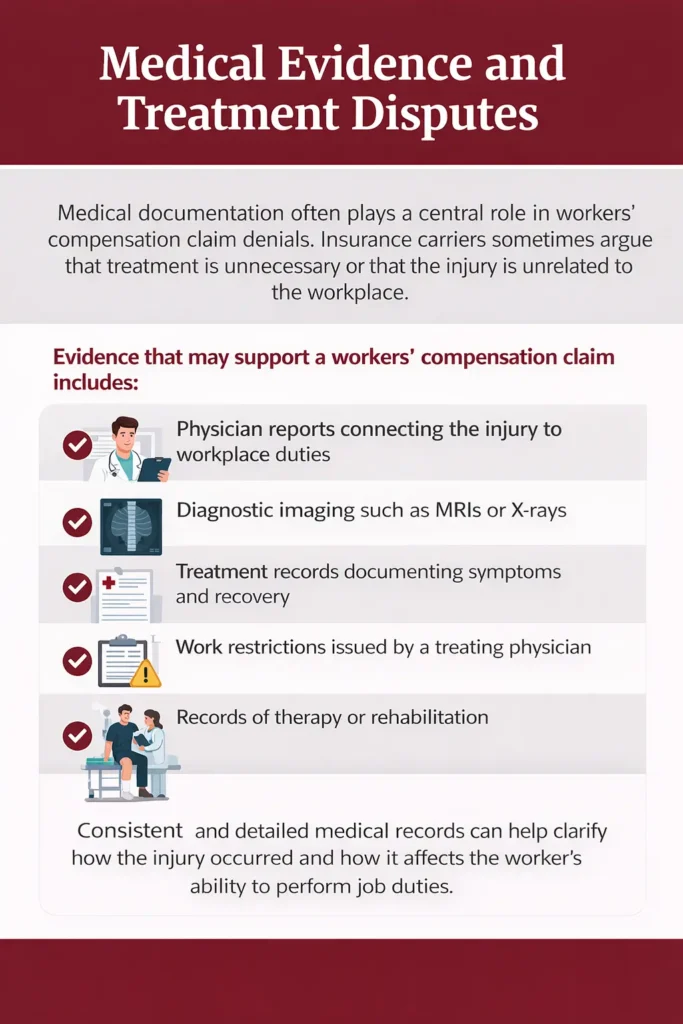
Medical documentation often plays a central role in workers’ compensation claim denials. Insurance carriers sometimes argue that treatment is unnecessary or that the injury is unrelated to the workplace.
Evidence that may support a workers’ compensation claim includes:
- Physician reports connecting the injury to workplace duties
- Diagnostic imaging such as MRIs or X-rays
- Treatment records documenting symptoms and recovery
- Work restrictions issued by a treating physician
- Records of therapy or rehabilitation
Consistent and detailed medical records can help clarify how the injury occurred and how it affects the worker’s ability to perform job duties.
Workers’ Compensation vs Personal Injury Claims
Workers’ compensation claims operate differently from traditional personal injury lawsuits.
Workers’ compensation generally provides benefits without requiring proof that the employer was negligent. Instead, benefits are available when an employee is injured while performing work-related tasks.
However, some workplace injuries involve third parties such as:
- Subcontractors working at the same job site
- Equipment manufacturers
- Delivery drivers
- Property owners responsible for unsafe conditions
When a third party contributed to the accident, additional legal claims may exist outside the workers’ compensation system.
A Chicago workers’ compensation claim denial lawyer can evaluate whether a case involves only a workers’ compensation dispute or whether other claims may also apply.
Legal Guidance for Workers Facing Claim Denials
Workers’ compensation disputes can involve complex procedures, documentation requirements, and deadlines. When a claim is denied, injured workers may need guidance in determining how to move forward.
At DePaolo Zadeikis & Pino, LLC, our attorneys represent injured workers throughout Chicago who are facing denied workers’ compensation claims. Our office reviews the circumstances surrounding the denial and helps clients understand the legal process for pursuing benefits under Illinois law.
Speak With a Chicago Workers’ Compensation Claim Denial Lawyer
A denied workers’ compensation claim can create financial stress and uncertainty, especially when medical treatment and lost income are involved. However, Illinois law provides a process for challenging denied claims through the Illinois Workers’ Compensation Commission.
If your workers’ compensation claim was denied in Chicago, a Chicago workers’ compensation claim denial lawyer at DePaolo Zadeikis & Pino, LLC can review your situation and explain the options available for pursuing benefits.
To discuss your case, call (312) 263-7560 for a free consultation.
Frequently Asked Questions About Workers’ Compensation Claim Denials
Workers who receive a denial often have many questions about their rights and the next steps. The following answers address common concerns about challenging a workers’ compensation claim denial in Illinois.
Can I Appeal a Denied Workers’ Compensation Claim in Illinois?
Yes. Injured workers in Illinois generally have the right to challenge a denied claim through the Illinois Workers’ Compensation Commission. The process may include submitting medical evidence, attending arbitration hearings, and presenting documentation explaining how the injury occurred while performing job duties.
How Long Do I Have to Challenge a Workers’ Compensation Claim Denial?
Deadlines depend on when the injury occurred and whether an Application for Adjustment of Claim has already been filed with the Illinois Workers’ Compensation Commission. Workers’ compensation cases involve strict timelines that can affect your ability to pursue benefits. Reviewing the denial quickly may help ensure that important filing deadlines are not missed.
Should I Speak With the Insurance Company After My Claim Is Denied?
Insurance carriers may request recorded statements, medical authorizations, or additional documentation after denying a claim. Before providing statements or signing documents, it may be helpful to understand your legal rights and how the information could affect your case. Statements given without preparation may later be used when evaluating your claim.