
Janitorial workers face a high risk for illness and injury due to physical demands and exposure to a multitude of germs and cleaning solvents used to maintain public spaces.
Hazards for Janitorial Workers
Janitors play an important role in the maintenance of office buildings, medical facilities, schools and colleges, and other public spaces. Their daily duties commonly include disposing of trash, mopping floors, cleaning windows and walls, sanitizing countertop surfaces, and restocking supplies. Janitors provide necessary services that keep public spaces operational, but they also face increased risks for job-related illnesses and injuries.
(Article continues below infographic)
According to the Bureau of Labor Statistics, janitors and cleaners sustain an average of 50,000 injuries each year that are severe enough to require days away from work. Next to roofers, farmers, loggers, and commercial fishermen, janitorial workers have one of the highest injury rates of all workers. Janitors face increased work-related dangers from the following conditions:
Exposure to Blood-borne Pathogens
Serious illnesses and diseases can occur from exposure to blood-borne pathogens. Among the most dangerous are the Human Immune Deficiency Virus (HIV), which causes AIDS, and the Hepatitis B Virus (HBV), which causes serious liver disease. Under OSHA regulations, janitors are guaranteed the right to full protection against blood-borne pathogens such as HIV and hepatitis. If rights are violated, Chicago workers’ comp lawyers can help with work-related claims and damages.
Exposure to Hazardous Chemicals
Janitors and professional cleaning crews regularly use powerful cleaners that contain hazardous chemicals. Such chemicals can damage the nasal passages, throat, lungs, and respiratory system if they are handled without proper safety precautions and protective gear. Certain chemicals used in floor strippers and cleaning solutions can cause asthma or trigger sudden asthma attacks. Due to potentially serious hazards, the Occupational Safety and Health Administration (OSHA) requires the use of personal protective equipment (PPE) and proper labeling when working with hazardous chemicals.
Slip and Fall Accidents
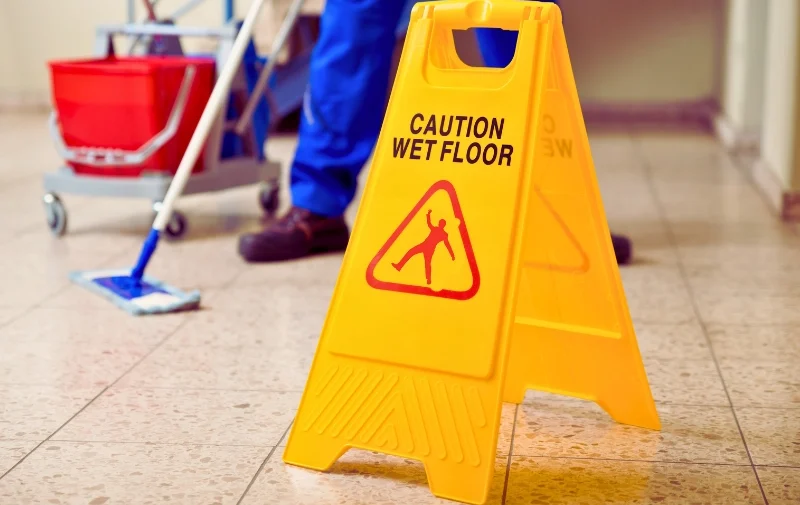
Janitors are responsible for keeping public spaces free of slipping and tripping hazards. In offices, medical facilities, hotels, and restaurants, wet floors caused by spills are a common occurrence. Wet, slippery floors are a leading cause of serious slip and fall accidents and injuries for janitorial workers. Workers’ comp lawyers in Chicago handle many injury cases caused by falls on wet, slippery, hard surface floors.
Musculoskeletal Disorders
Performing daily and long-term physical tasks often contributes to musculoskeletal disorders such as muscle sprains, torn ligaments, inflamed joints, and neck and back injuries. Janitors sustain many of these injuries while performing daily job duties. Injury reports from the National Safety Council show that back injuries account for 46% of musculoskeletal disorders for janitors. Primary causes are moving heavy objects and improper lifting that puts a strain on the spine.
Repetitive Motion Injuries
Janitorial work involves a variety of repetitive motions such as reaching for items on shelves, lifting boxes, bending to clean, and pushing and pulling mops, brooms, and cleaning tools. When repetitive motions are performed on a daily or regular basis, they can have a cumulative effect on body parts creating ongoing pain and swelling and carpal tunnel syndrome.
Electrical Shock
Janitorial workers commonly use electrical equipment for cleaning chores. Hand-held power tools, vacuum cleaners, and floor buffers expose workers to risks of electrical shock on the job. Heavy-duty electrical tools create a strong electrical current that increases the risk of electrical shock, especially when used near moisture, spills, and wet floors. Workers’ comp lawyers often see cases of electrical shock caused by power tools.
Filing a Workers’ Compensation Claim
All Illinois workers who suffer work-related injuries have the right to file a workers’ compensation claim. This includes Chicago janitorial workers who clean and sanitize work environments to keep employees safe in a well-maintained building. Janitors have an important impact on the health and safety of other workers, but their jobs often put them at risk for serious health problems.
In Illinois, workers are entitled to compensation for work-related injuries under the Illinois Workers’ Compensation Act. Workers are entitled to compensation for the following:
- Medical expenses
- Rehabilitation expenses
- Vocational retraining costs
- Lost wages
- Disability benefits
- Survivor benefits (if a worker is killed on the job)
Illinois has a state-mandated insurance program that provides compensation to all workers who sustain work-related illnesses and injuries, regardless of who is at fault. Under these conditions, a worker is generally not allowed to file a lawsuit against his or her employer for work-related injuries. However, if a claim is denied by the Illinois Workers’ Compensation Commission, the worker can pursue legal actions against his/her employer.
If a worker chooses to pursue legal action, the lawsuit must be filed within the Illinois statute of limitations, which is two years from the date of injury, or the lawsuit may be dismissed by the court.