

Chicago Repetitive Stress Injury Workers’ Compensation Lawyer
Our Chicago repetitive stress injury workers’ compensation lawyers can help you secure medical care and wage benefits when job-related strain causes chronic pain, nerve damage, or loss of function.
Repetitive stress injuries often face skepticism from insurance companies. At DePaolo Zadeikis & Pino, LLC, you work with attorneys who understand how insurers evaluate repetitive trauma claims. We prepare detailed medical documentation, connect your job duties to your diagnosis, and build a case that establishes clear work-related causation.
“Repetitive stress injuries may not happen in a single moment,
but they can change your ability to work just as quickly. We
help injured workers prove their claims and secure the benefits
Illinois law provides.”
~ Attorney Alex Pino

Early legal guidance can protect your rights. Call DePaolo Zadeikis & Pino at (312) 263-7560 for a consultation about your repetitive stress injury claim.
Why Work With Us for Your Repetitive Stress Injury Claim?
Repetitive trauma claims require careful medical evidence and a strong legal strategy. Insurance carriers frequently argue that these injuries are degenerative or unrelated to work. At DePaolo Zadeikis & Pino, you receive focused representation designed to overcome those arguments.
Our attorneys are known for:
- Detailed analysis of job duties and physical demands
- Strong medical documentation development
- Strategic handling of independent medical examinations
- Preparation for hearings before the Illinois Workers’ Compensation Commission
We prepare every repetitive stress injury claim as if it may proceed to arbitration. That preparation strengthens settlement negotiations and positions your case for success.

Alexander Pino focuses his practice in the areas of Workers’ Compensation and Personal Injury.
Alexander grew up in the suburbs of Chicago. After receiving a BS in Real Estate from DePaul University, Alexander attended DePaul University College of Law. While in law school, Alexander worked as a law clerk at the Illinois Attorney General’s Office, where he assisted attorneys in the Child Welfare Litigation Department. Alexander also held various internships at the Cook County Public Defender, where he aided Assistant Public Defenders in the Felony Trial Division and the Homicide Task Force. Alexander also worked as a Law Clerk at the personal injury law firm Horwitz, Horwitz & Associates. Additionally, during law school, Alexander held volunteer positions in local government as a board member in both the Parks and Recreation Commission and the Environmental and Health Commission of his hometown.
In those rare moments when he is not busy fighting for his clients, Alexander enjoys working out, hiking, fishing and spending time with his family.
Understanding Repetitive Stress Injuries
Repetitive stress injuries occur when repeated motion places strain on muscles, tendons, or nerves over time. Unlike injuries caused by a single accident, these conditions develop gradually.
Common repetitive stress injuries include:
- Carpal tunnel syndrome
- Tendonitis
- Bursitis
- Rotator cuff strain
- Epicondylitis (tennis elbow)
- Trigger finger
These injuries often begin with mild discomfort. Over time, pain may worsen, range of motion may decrease, and weakness may develop. Without treatment, repetitive strain can lead to long-term impairment.
Illinois workers’ compensation covers repetitive trauma injuries when they arise out of and during the course of employment.
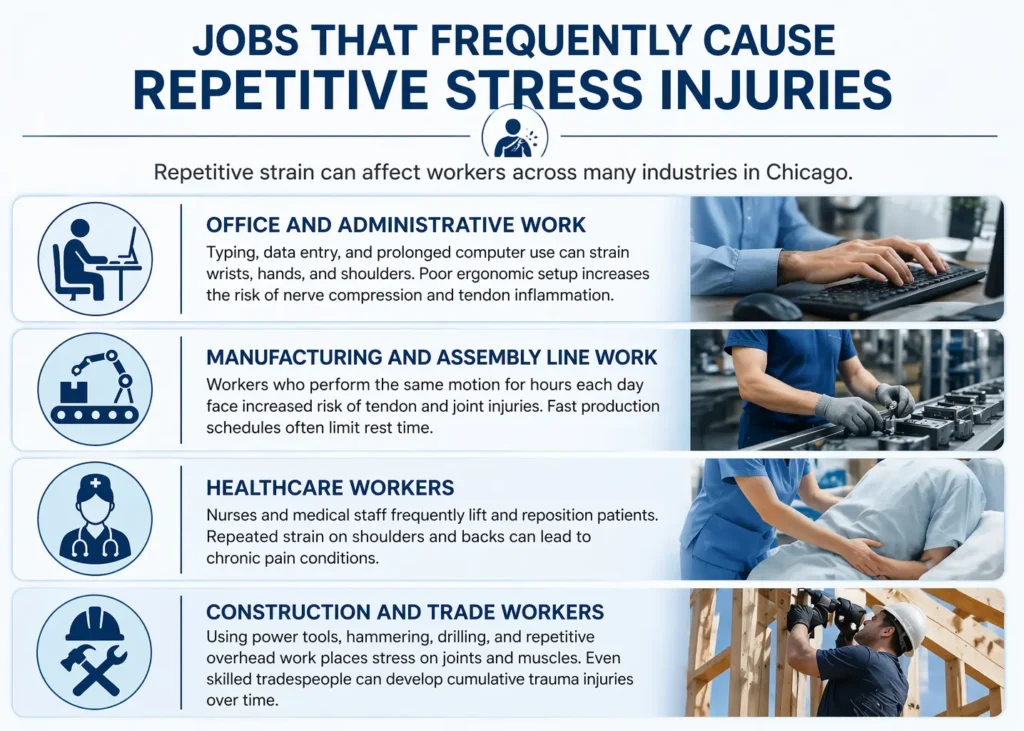
Jobs That Frequently Cause Repetitive Stress Injuries
Repetitive strain can affect workers across many industries in Chicago.
Office and Administrative Work
Typing, data entry, and prolonged computer use can strain wrists, hands, and shoulders. Poor ergonomic setup increases the risk of nerve compression and tendon inflammation.
Manufacturing and Assembly Line Work
Workers who perform the same motion for hours each day face increased risk of tendon and joint injuries. Fast production schedules often limit rest time.
Healthcare Workers
Nurses and medical staff frequently lift and reposition patients. Repeated strain on shoulders and backs can lead to chronic pain conditions.
Construction and Trade Workers
Using power tools, hammering, drilling, and repetitive overhead work places stress on joints and muscles. Even skilled tradespeople can develop cumulative trauma injuries over time.
Proving a Repetitive Stress Injury Claim in Illinois
Proving a repetitive trauma injury requires establishing a connection between your job duties and your medical condition.
You must demonstrate:
- The nature of your job required repetitive motion
- The repetitive tasks contributed to your injury
- A medical professional supports the work-related diagnosis
Insurance companies often argue that repetitive stress injuries result from aging or hobbies. Strong medical opinions and detailed job descriptions help counter these claims.
Reporting your symptoms immediately and seeking medical care early strengthens your case.
Workers’ Compensation Benefits for Repetitive Stress Injuries
If your repetitive stress injury claim is approved, you may qualify for several types of workers’ compensation benefits.
Medical Benefits
You are entitled to reasonable and necessary treatment related to your condition, including diagnostic testing, physical therapy, medications, and surgery if required.
Temporary Total Disability Benefits
If your injury prevents you from working during recovery, you may receive wage replacement benefits. These payments typically equal two-thirds of your average weekly wage, subject to statutory limits.
Permanent Partial Disability Benefits
If your condition results in permanent impairment, you may qualify for additional compensation based on the extent of disability.
Vocational Rehabilitation
If you cannot return to your previous position, you may qualify for retraining or job placement assistance.
A Chicago repetitive stress injury workers’ compensation lawyer ensures your benefits reflect the full impact of your condition.
How Repetitive Stress Injuries Are Evaluated
Once you reach maximum medical improvement, your physician may assign a permanent impairment rating. This rating influences the value of permanent partial disability benefits.
Factors affecting evaluation include:
Severity of nerve or tendon damage
Ongoing work restrictions
Loss of strength or range of motion
Need for surgery
Impact on earning capacity
Insurance companies may rely on independent medical examinations to assign lower impairment ratings. Careful medical documentation and clear explanation of job limitations help protect the value of your claim.
What to Do if Your Repetitive Stress Injury Claim Is Denied
Claims involving repetitive injuries often face a higher rate of denial when compared to single-incident injuries. If your claim is denied, you have options.
Review the Denial Letter
Understand the stated reason for denial. Determine whether the dispute involves causation, reporting, or medical necessity.
Continue Medical Treatment
Stopping treatment can weaken your case. Ongoing care supports your claim and documents the severity of your condition.
File an Application for Adjustment of Claim
You may challenge the denial by filing a claim with the Illinois Workers’ Compensation Commission.
Consult a Workers’ Compensation Attorney
Legal representation strengthens your ability to present evidence, challenge adverse medical opinions, and pursue benefits through arbitration if necessary.
Challenges in Repetitive Stress Injury Claims
Repetitive stress cases often involve disputes over:
Whether the injury is work-related
The date of injury
Pre-existing conditions
Extent of permanent impairment
Clear medical documentation and timely reporting help resolve these disputes.
Did You Know? In Illinois, the “date of injury” for a repetitive stress claim is not always when symptoms first appear. Instead, it is often when you knew or should have known your condition was related to your work. This distinction can affect your deadline to report the injury and file a claim, making early action critical.
Frequently Asked Questions About Repetitive Stress Injury Workers’ Compensation Claims
Repetitive stress injuries raise unique legal questions. Below are answers to common concerns from injured workers in Chicago.
How long do I have to report a repetitive stress injury?
Under Illinois law, you generally must notify your employer within 45 days of when you knew or should have known that your injury was work-related. Because repetitive injuries develop over time, identifying this date can be complex. Prompt reporting strengthens your claim.
Can I receive benefits if my injury developed over several years?
Yes. Repetitive trauma injuries qualify for workers’ compensation if your job duties contributed to the condition. The key issue is medical evidence linking your repetitive tasks to your diagnosis.
What if the insurance company says my condition is degenerative?
Insurance carriers frequently argue that repetitive stress injuries are age-related. Illinois law allows recovery when work activities aggravate or accelerate an existing condition. Medical testimony is critical in these cases.
Do I need a lawyer for a repetitive stress injury claim?
Repetitive trauma claims often face causation disputes and medical challenges. Working with an attorney helps you better understand and present proper documentation, protects your rights during hearings, and strengthens negotiations with insurers.
Call a Chicago Repetitive Stress Injury Workers’ Compensation Lawyer Today
Chronic pain and limited mobility can threaten your ability to earn a living. A Chicago repetitive stress injury workers’ compensation lawyer helps you pursue medical benefits, wage replacement, and compensation for permanent impairment under Illinois law.
Call DePaolo Zadeikis & Pino at (312) 263-7560 for a consultation about your repetitive stress injury claim.