

Chicago Catastrophic Injury Lawyer
A catastrophic injury can alter the course of your life in an instant, leaving you with serious medical needs and uncertainty about what comes next. In these situations, working with a Chicago catastrophic injury lawyer may help you understand your legal options and whether you can pursue compensation for your losses. Claims involving severe injuries often include damages related to medical care, lost income, and long-term support, and they benefit from early evaluation.
The effects of a catastrophic injury often extend well beyond the initial recovery period. Ongoing treatment, financial pressure, and changes to your daily routine can create lasting challenges. At DePaolo Zadeikis & Pino, your situation is evaluated with careful attention to both your current condition and the support you may need over time.
“A catastrophic injury requires more than a short-term solution. Your legal claim should reflect the full scope of your recovery, including the care and support you will need for years ahead.”


Alexander Pino focuses his practice in the areas of Workers’ Compensation and Personal Injury.
Alexander grew up in the suburbs of Chicago. After receiving a BS in Real Estate from DePaul University, Alexander attended DePaul University College of Law. While in law school, Alexander worked as a law clerk at the Illinois Attorney General’s Office, where he assisted attorneys in the Child Welfare Litigation Department. Alexander also held various internships at the Cook County Public Defender, where he aided Assistant Public Defenders in the Felony Trial Division and the Homicide Task Force. Alexander also worked as a Law Clerk at the personal injury law firm Horwitz, Horwitz & Associates. Additionally, during law school, Alexander held volunteer positions in local government as a board member in both the Parks and Recreation Commission and the Environmental and Health Commission of his hometown.
In those rare moments when he is not busy fighting for his clients, Alexander enjoys working out, hiking, fishing and spending time with his family.
What Is Considered a Catastrophic Injury?
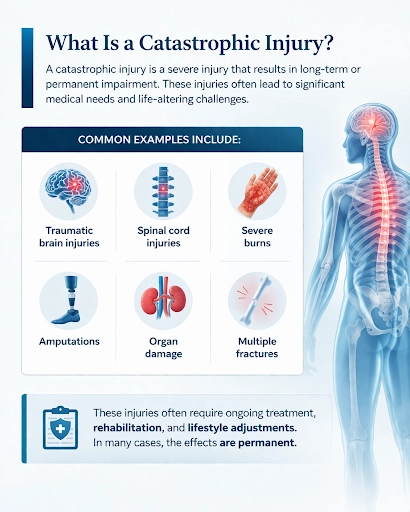
A catastrophic injury is a severe injury that results in long-term or permanent impairment. These injuries often lead to significant medical needs and life-altering challenges.
Common examples include:
- Traumatic brain injuries
- Spinal cord injuries
- Severe burns
- Amputations
- Organ damage
- Multiple fractures
These injuries often require ongoing treatment, rehabilitation, and lifestyle adjustments. In many cases, the effects are permanent.
Why These Cases Require Immediate Legal Action
Acting quickly after a catastrophic injury can play a critical role in protecting your claim and your future. In the early days following an accident, important evidence may be lost, surveillance footage can be erased, and witness memories may begin to fade. At the same time, insurance companies often start building their defense immediately, looking for ways to limit their financial responsibility.
Delays can also affect your medical documentation. Gaps in treatment or incomplete records may be used to question the severity of your injuries or whether they were caused by the incident. Early legal involvement helps ensure that your condition, treatment, and long-term needs are clearly documented from the start.
Taking early action helps you:
- Preserve key evidence, such as photos, reports, and video footage before it is lost or destroyed
- Establish a clear medical record that connects your injuries directly to the accident
- Secure expert opinions to explain the long-term impact of your condition
- Avoid mistakes in communication or documentation that can weaken your claim
A strong start can influence how your case is evaluated, negotiated, and, if necessary, presented in court.
Common Causes of Catastrophic Injuries in Chicago
Catastrophic injuries often result from negligence. These incidents can happen in many settings.

Motor Vehicle Accidents
High-impact crashes can lead to brain injuries, spinal damage, and other severe harm.
Workplace Accidents
Construction and industrial environments present serious risks, including falls and equipment failures.
Medical Errors
Mistakes in treatment or diagnosis can result in permanent injury.
Slip and Fall Incidents
Unsafe conditions on property can lead to serious injuries, especially in older adults.
Defective Products
Faulty equipment or unsafe products can cause significant harm.
Violent Acts
Acts of violence, including assaults or shootings, can lead to catastrophic injuries such as traumatic brain injuries or spinal cord damage.
The True Cost of a Catastrophic Injury
The cost of a catastrophic injury extends beyond initial treatment. You may face long-term financial challenges.
These may include:
- Hospital bills and surgeries
- Rehabilitation and therapy
- Long-term medical care
- Lost wages
- Reduced earning ability
- Assistive devices and home changes
These expenses can continue for years or even a lifetime.
How Compensation Works in Catastrophic Injury Cases
You may recover compensation for both financial and personal losses. Because catastrophic injuries often involve long-term or permanent effects, the value of a claim is typically higher than in less serious cases. A thorough evaluation ensures that both your current and future needs are fully considered.
Economic Damages
These include measurable losses such as:
- Medical expenses
- Future care costs
- Lost income
- Loss of earning capacity
These damages are supported by records, bills, and expert projections. They are intended to reflect the full financial impact of your injury over time.
Non-Economic Damages
These address the impact on your life:
- Pain and suffering
- Emotional distress
- Loss of enjoyment of life
These damages recognize how your injury affects your daily routine, relationships, and overall quality of life. While they are not tied to specific bills, they are a critical part of your claim.
Future Costs Must Be Accounted For
Your claim should include future medical care, therapy, and support needs. These factors often make up a large portion of catastrophic injury claims. Planning for long-term care helps ensure you are not left covering expenses on your own later.
Proving Liability in Your Case
To recover compensation, you must show that another party caused your injury.
This requires proving:
- A duty of care existed
- That duty was breached
- The breach caused your injury
- You suffered damages
Evidence may include medical records, accident reports, and expert testimony.
Insurance companies often aim to reduce payouts. They may question your injuries or offer a low settlement early. You should be cautious when communicating with adjusters. Statements can be used to weaken your claim. A structured legal approach helps protect your interests during negotiations.
The Role of Medical Experts and Life Care Planning
Expert input is essential in catastrophic injury cases. Some of the experts our team turns to when building strong claims include:
Medical Experts
Medical professionals assess your condition and outline your treatment needs.
Life Care Planners
They evaluate your future care requirements, including:
- Ongoing treatment
- Equipment needs
- Home modifications
- Daily assistance
Their findings help determine the value of your claim.
Illinois Laws That Affect Your Claim
Comparative fault laws in Illinois provide that you can still recover damages if you are less than 50% at fault for the accident, though your compensation will be reduced based on your share of responsibility. You generally have two years from the date of your injury to file a personal injury claim, which makes timely action important. It is also worth noting that Illinois does not cap most personal injury damages, allowing claims involving serious injuries to reflect the full extent of financial and personal losses.
The Steps to Take After a Catastrophic Injury
If you have already left the hospital, your focus should shift to protecting your health, your finances, and your legal rights.
1. Follow Your Treatment Plan
Attend all follow-up appointments, therapy sessions, and specialist visits. Gaps in treatment can affect both your recovery and your claim.
2. Track Your Recovery and Limitations
Keep a daily record of your symptoms, pain levels, and physical limitations. Document how the injury affects your routine, mobility, and ability to work.
3. Organize Medical and Financial Records
Save all bills, prescriptions, and receipts. Keep records of lost wages and any changes to your employment status.
4. Limit Communication With Insurance Companies
Avoid giving recorded statements or signing documents without review. Insurance adjusters may seek information that reduces your claim value.
5. Evaluate Your Long-Term Needs
Consider future care, home modifications, and support services. These factors should be included in your claim.
6. Speak With a Lawyer as Soon as Possible
Legal guidance after your release from the hospital can help you avoid costly mistakes and build a strong case based on your ongoing needs.
How Long Does a Catastrophic Injury Case Take?
These cases often take time due to their complex nature. Factors that affect the timeline include:
- The severity of your injury
- Length of treatment
- Disputes over liability
- Whether the case settles or proceeds to trial
Some cases resolve within months, while others take longer to reach a fair outcome.
Frequently Asked Questions About Catastrophic Injury Claims
What qualifies as a catastrophic injury?
A catastrophic injury involves permanent or long-term impairment that affects your ability to function. This may include brain injuries, paralysis, or severe burns. These injuries often require ongoing care and can prevent you from returning to work or managing daily activities independently.
How much is a catastrophic injury case worth?
The value of your case depends on your medical costs, lost income, and long-term care needs. Catastrophic injury claims often involve higher compensation due to ongoing expenses. A full evaluation considers both current and future losses to determine a fair amount.
Can I recover compensation if I am partially at fault?
Yes. Under Illinois law, you may recover damages if you are less than 50% at fault. Your compensation will be reduced based on your level of responsibility. This makes it important to present strong evidence supporting your claim.
How are future medical costs calculated?
Future medical costs are estimated using expert evaluations, including input from doctors and life care planners. These professionals assess your condition and project the care you will need over time. This ensures your claim reflects long-term expenses.
Do I need a lawyer for a catastrophic injury claim?
Catastrophic injury cases involve significant damages and detailed evidence. Legal guidance can help you build a strong claim, avoid mistakes, and handle negotiations with insurance companies. This can impact the outcome of your case.
Speak With a Chicago Catastrophic Injury Lawyer Today
If you need a Chicago catastrophic injury lawyer, now is the time to act. Your recovery and financial future depend on the steps you take next.
Call DePaolo Zadeikis & Pino at (312) 263-7560 for a consultation today.